
NewsSTAND · Local & National News · November 6, 2026
Google Is Building in West Memphis. The Bigger Story Is Putting People First.
Google’s West Memphis investment pairs technology growth with energy-cost protections, workforce opportunities and a $25 million fund.
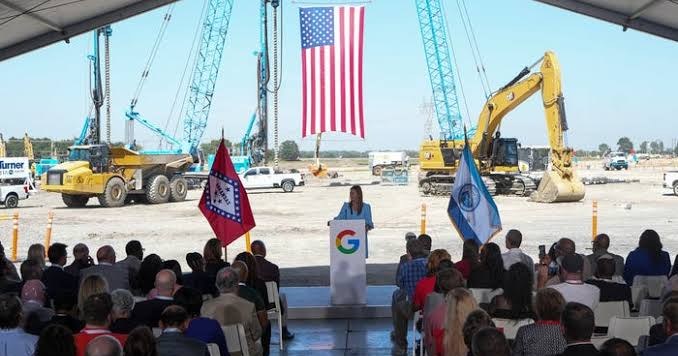
Google’s West Memphis investment pairs technology growth with energy-cost protections, workforce opportunities and a $25 million community fund.
By JR Robinson | JustMy
Across America, the arrival of a data center increasingly prompts a question: Will the community share in the opportunity—or inherit the costs?
Concerns about electricity demand, water use and neighborhood impacts have helped fuel public skepticism. An Annenberg Public Policy Center survey conducted in summer 2026 found that 61% of American adults opposed new data centers in their area. That measures national opinion, not the percentage of communities rejecting projects, but it captures the challenge facing developers and local leaders.
West Memphis offers a different story to examine.
Google’s first Arkansas data center is being developed alongside commitments involving energy-cost protections, workforce education and direct community investment. Together, those commitments provide the foundation for a community-first approach: welcoming technology while asking what residents receive in return.
A Major Investment With a Broader Purpose
On October 2, 2025, Google announced a $4 billion investment in Arkansas through 2027. The announcement included its first data center in the state, located in West Memphis, along with cloud and artificial-intelligence infrastructure and programs supporting energy resilience and affordability.
That distinction matters. The entire $4 billion commitment should not be described as money flowing into West Memphis' municipal budget.
Nevertheless, the city’s selection places it directly within the infrastructure supporting an expanding digital economy. The opportunity extends beyond hosting buildings: It creates a platform for conversations about careers, local participation and the resources needed to support growth.

Asking the Essential Question: Who Pays for the Power?
Electricity is central to any serious data-center discussion. A large new customer requires substantial resources, and existing customers deserve to understand whether they will carry additional costs.
Entergy Arkansas says its original and updated agreements require Google to pay the full cost of the power resources it needs while contributing toward shared system costs. The utility projects $2.1 billion in net customer benefits across the arrangements.
That total includes $1.6 billion associated with the first phase and at least $500 million in additional projected savings from a second phase, beginning in 2028 and extending over 20 years.
These are Entergy’s projections, not savings already delivered to individual households. Nor do they mean every customer’s total bill will fall from today’s level. Entergy’s more precise claim is that bills will be lower than they otherwise would be because Google contributes toward costs existing customers would otherwise share.
That is a meaningful distinction—and a central part of the project’s public-interest case.
Building Infrastructure, With Regulatory Review Ahead
Public materials reviewed describe power and grid investments connected to the project, including a 250 MW Driver Solar resource, a 563 MW Hot Springs resource, a planned 350 MW battery resource, and a 440 MW solar resource.
Bringing the Benefits Closer to Home
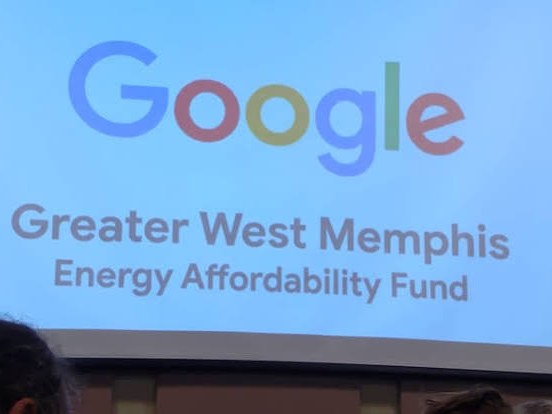
Google established a $25 million West Memphis Energy Impact Fund, and plans reported in April 2026 included support for homes needing critical repairs before weatherization improvements can proceed.
Giving the Community a Seat at the Table
Google also established a Community Energy Advisory Council, with Elevate Energy serving as fund administrator.
Reported representation includes West Memphis and West Memphis Utilities, Crittenden County, the West Memphis School District, Southland Casino, the Arkansas Energy Office, faith-based leadership, Entergy and regional community organizations.
A council does not guarantee that every resident’s concern will be resolved. It does provide a documented structure for local institutions to participate in shaping community investment.
That is an important part of the story: Local leadership and business are not simply appearing at an announcement. They have roles in the framework surrounding the project’s community benefits.
Preparing People for What Comes Next
Google’s Arkansas commitment also includes no-cost access to Google AI courses and Career Certificates through a partnership with the Arkansas Department of Commerce, beginning with students at the University of Arkansas and Arkansas State University.
Those learning opportunities are not guaranteed jobs at the West Memphis campus. Construction employment, permanent operations positions and broader technology training must remain distinct.
Still, including education alongside infrastructure recognizes a basic principle: People need ways to prepare for the economy developing around them.
A Model to Measure, Not Just Celebrate
- Google investment in Arkansas through 2027
- $4 billion
- Google investment in Arkansas through 2027
- Energy Impact Fund for Crittenden County and nearby communities
- $25 million
- Energy Impact Fund for Crittenden County and nearby communities
- Driver Solar resource
- 250 MW
- Driver Solar resource
- Hot Springs resource
- 563 MW
- Hot Springs resource
This partnership represents more than economic growth. It represents a shared commitment to innovation, sustainability and opportunity for our community.
Know someone who should read this?
Dive into our quick-start guides for Business, Enterprise, and Partner users—see how easy it is to grow faster, connect better, and dominate your market!